Your DLA Toolkit: Step-by-Step Help for Families

Getting Started: Gathering Your Evidence

🔑 Key Reminders: Before You Begin Your Form

📌 Remember — the decision-maker doesn’t know your child, your life, or your daily reality.
You are the expert on your child. Be bold, clear, and unapologetically detailed. Paint a full picture using your voice — not jargon. Show what life really looks like.

Describe the support your child needs — not just what they receive.
Don’t underplay the situation. Even if you’re managing brilliantly or have found creative workarounds, focus on the underlying need. Don’t assume they’ll understand the diagnosis or what it means day-to-day — explain it like they’ve never met a child like yours before.

📄 Start strong by gathering your evidence.
Collect anything that backs up your child’s needs — medical letters, EHCPs, care plans, school reports, therapist input, or observations from people who know them well. Strong evidence makes your application easier to understand and harder to dismiss.
👉 Check out our Keep Good Records section for practical help building your evidence pack.

✅EVIDENCE EXAMPLES: Evidence isn't just medical — letters from carers and family members can be powerful.

📬 Letters from Professionals

Evidence from professionals across medical, education, and community settings can be crucial in demonstrating needs, challenges, and support required.
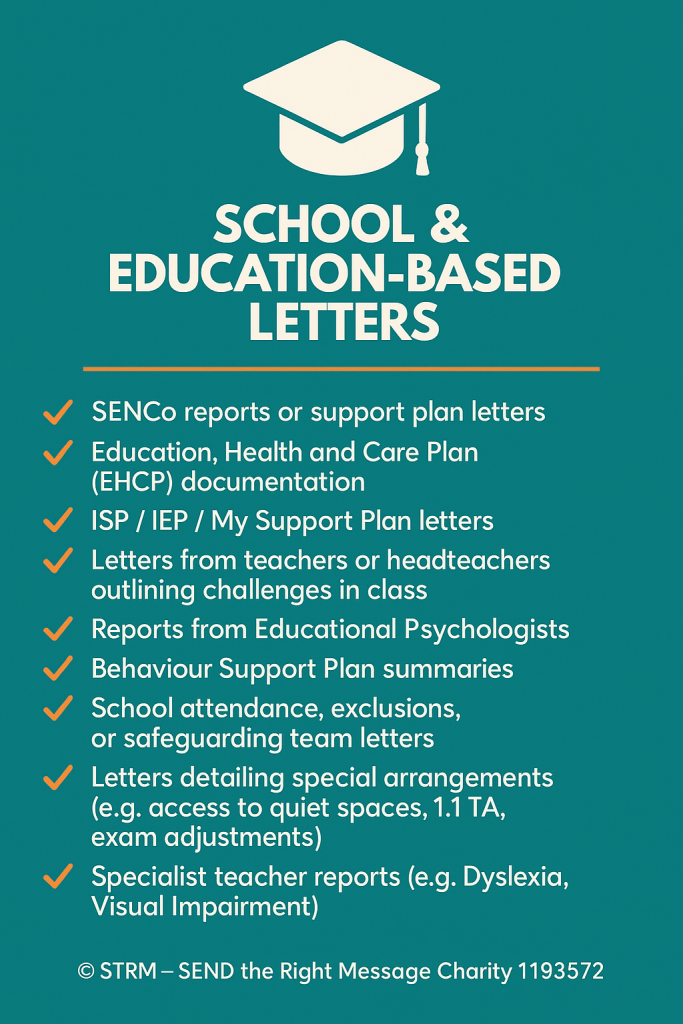
These documents can help paint a fuller picture of your child’s needs during the school day — supporting your DLA claim.

📌 You don’t need all of these — just include what is relevant and current.

School & Education-Based Letters – What Parents Need to Know

Schools often hold valuable insight into your child’s day-to-day challenges, strengths, and the support they need. The letters and reports shared by schools and education professionals can be powerful evidence when you’re applying for extra help or explaining your child’s needs to other services.

You might already have some of this paperwork in your email inbox, child’s school file, or meeting notes.

Here are helpful examples to look out for:

SENCo reports or support plan letters – Notes from the Special Educational Needs Coordinator (SENCo) explaining your child’s needs and support in place.

EHCP documentation – If your child has an Education Health and Care Plan, this is vital evidence showing the level of need.

ISP / IEP / My Support Plan – These are school-created documents that set out learning targets and support strategies.

Teacher or Headteacher letters – Descriptions of your child’s struggles, behaviours, or achievements in the classroom.

Educational Psychology reports – These assessments explore learning styles, cognitive profiles, and any additional needs.

Behaviour Support Plans – If your child has had challenging behaviours, schools may have created plans to support them.


Attendance or safeguarding letters – Patterns of absence or concerns logged by the school can help show the impact of needs.

Letters about special arrangements – For example, needing a quiet room, a 1:1 Teaching Assistant, or exam changes.

Specialist teacher reports – Such as those from a dyslexia, sensory, or visual impairment specialist.


📁 These documents help paint a picture of your child’s everyday experience and what support they require.

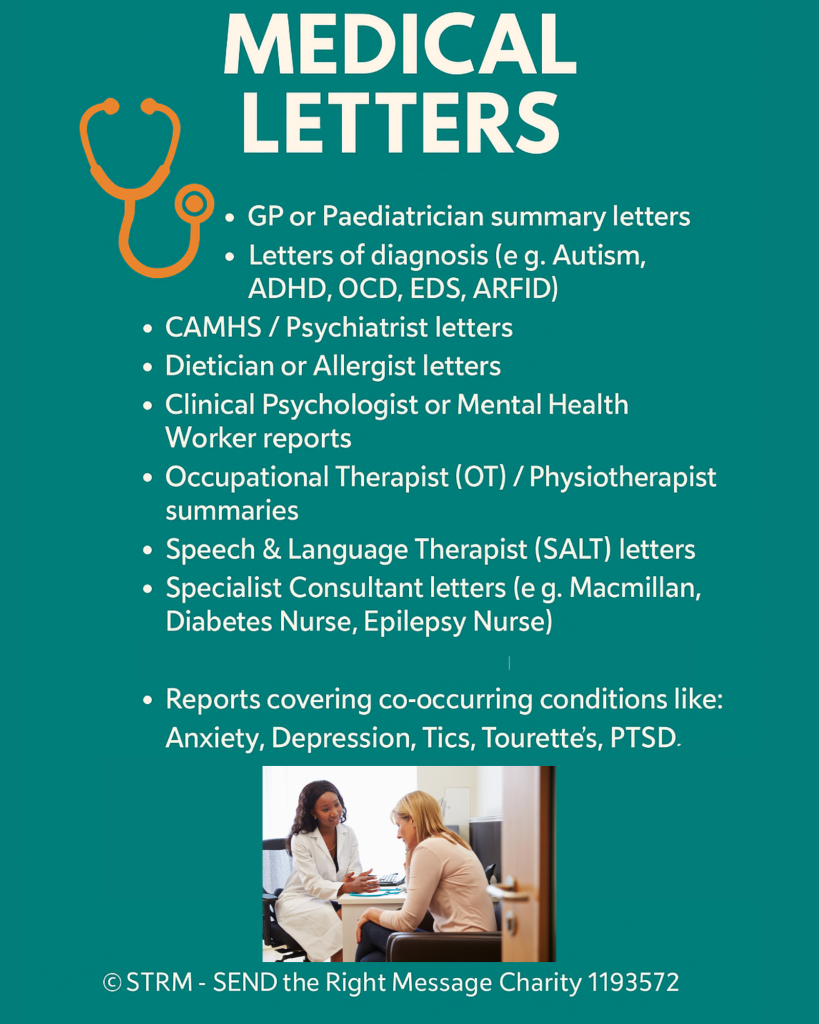
Medical & Clinical Letters – What Parents Need to Know

When you’re applying for extra support (like Disability Living Allowance, EHCPs, or help at school), you’ll often be asked for “medical evidence.” But don’t worry – this doesn’t just mean hospital letters or long reports. It includes any written information from health professionals that explains your child’s condition, diagnosis, or day-to-day needs.

You might already have some of this without realising it.

📋 Many children have more than one condition. Some professionals call this “co-occurring” or “comorbid” needs. You can also include letters or reports showing things like:

  • Anxiety

  • Depression

  • Tics or Tourette’s

  • PTSD (Post-Traumatic Stress Disorder)

  • Sensory Processing Differences

Here are helpful examples:

GP or Paediatrician letters – These are usually short summaries that explain your child’s condition and any treatments or referrals.

Diagnosis letters – Official confirmation of a diagnosis (e.g. Autism, ADHD, OCD, Ehlers-Danlos Syndrome, ARFID).

CAMHS or Psychiatrist letters – These may describe mental health challenges and any medication or support in place.

Dietician or Allergy clinic letters – Helpful if your child has food restrictions, feeding difficulties, or allergies.

Mental Health or Clinical Psychologist reports – These explain emotional or behavioural needs in more detail.

Occupational Therapy or Physio letters – These highlight things like movement, coordination, fine motor skills, or sensory needs.

Speech and Language Therapy (SALT) letters – Useful if your child has communication or language difficulties.

Specialist Consultant letters – Like Neurology, Genetics, Sleep Clinics – they can explain more complex medical conditions.

Letters from nurses or health charities – For example, Macmillan, Diabetes Nurses, or Epilepsy Nurses.

Medication letters – These confirm what your child is prescribed, who by, and why.

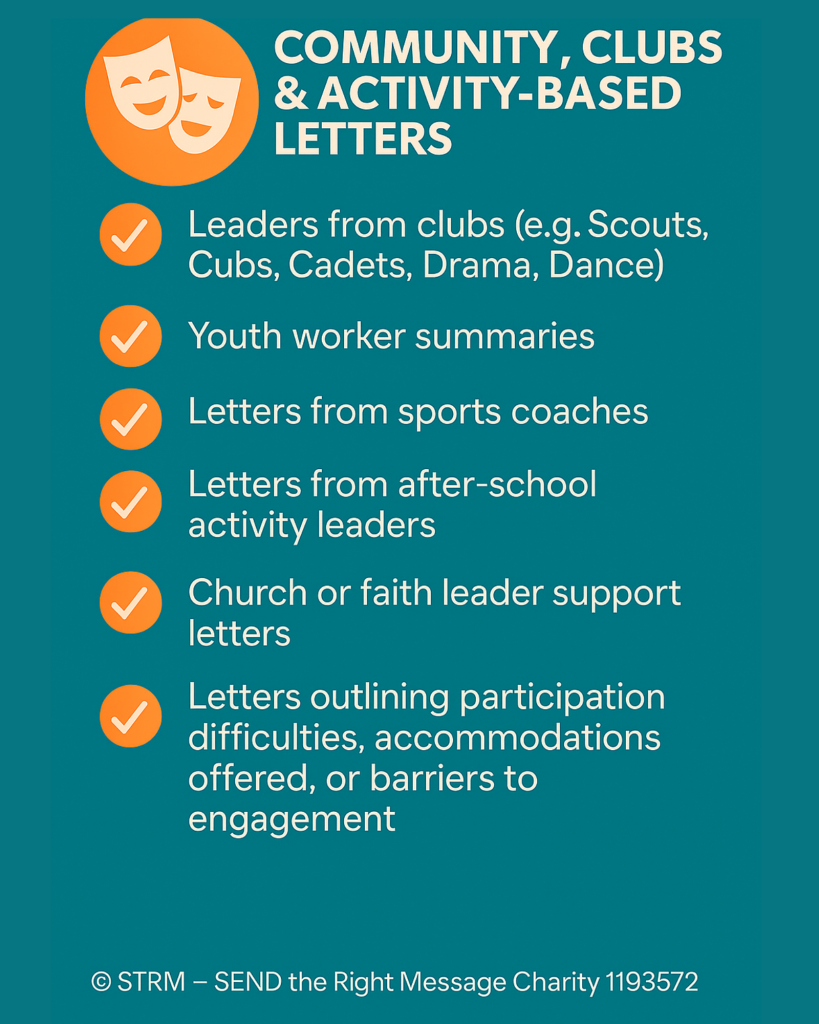
Community, Clubs & Activity-Based Letters – What Parents Need to Know

Support for your child isn’t just about school or doctors. Clubs, groups, and community activities often give a real insight into how your child copes in everyday life — especially outside of the home or school setting.

If your child takes part (or struggles to take part) in activities like Scouts, sports, drama, or youth groups, the adults who run those sessions might be able to write a support letter that shows what’s working — or what’s hard.

These letters help show:

  • What support your child needs to join in

  • If they’ve had to stop attending

  • Any changes made to help them

  • Any worries they’ve seen (e.g. anxiety, sensory overload, social challenges)

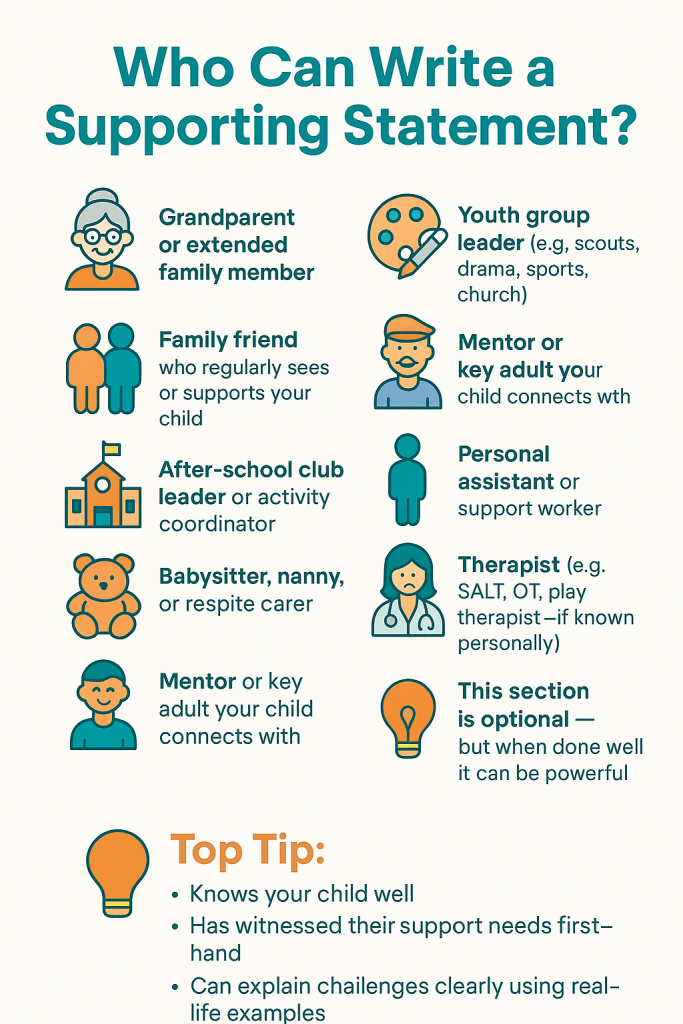
🗣️ Statements from Others: Who Else Can Share Your Child’s Story?

Sometimes, a statement from someone else who knows your child well can add weight to your claim. This could be a therapist, support worker, carer, family member, or trusted professional who understands your child’s needs and daily challenges.

We recommend avoiding asking your school to complete this section.

The DWP may contact the school directly after your claim is submitted, and a duplicate statement can confuse or dilute your application.

📋 If you do include a statement:

  • Make sure it fully backs up everything in your claim.

  • Ask them to include clear examples of the difficulties your child experiences.

  • The person writing it should sign and date their statement.

  • You can include more than one if several people know different aspects of your child’s support needs.

📧 If the statement is emailed to you:

  • Print the full email, including the sender and recipient details, so it’s clear who wrote it and when it was sent.

📎 Statements can be attached to the form or submitted on a separate sheet.

📝 This section is optional — but when done well, it can be powerful.
🌟 Well Done! You’ve done an amazing job gathering your information and evidence — this can be one of the hardest parts.

Every letter, report, and note helps build a clear picture of your child’s needs.

👉 Now, turn to the next section to keep going — you’re nearly there!

© 2025 STRM – SEND the Right Message Charity 1193572. This DLA support content is for use by registered STRM members only. It is for personal use and may not be copied, shared, or distributed without prior written permission.